Tuesday, January 27, 2009

“Closing”, Another “Bad Word” In Sales?


Recently, in a conversation with a colleague, I used the word “closing”, relative to Sales. This person, literally, cringed, in response to my use of the word. I’ve had that sort of reaction numerous times before. Maybe you have too. Every time it happens, I silently wish that I could do something to have this topic viewed in a more favorable light.


It seems that there are negative connotations that go along with the word “closing” that are similar to what I addressed in an earlier posting entitled “The Pride and Prejudice of Sales“. That article dealt with a commonly found bias in our culture, equating the title “Sales Person” with the label “Huckster”. With those who hold that view, I suppose they envision “closing” as the time when “the Huckster springs his or her trap.”

One publication I’ve found, that does a good job of tackling this issue is “10 Steps To Sales Success“, by Tim Breithaupt. Here, the ideal Sales process is described as “… a mutual journey of honesty, trust and respect as you and your Customer work in harmony …”. In this context, the Author presents “closing” as “… confirming the sale using a non-manipulative, straightforward approach and presenting a practical, value-added solution.” I think that is an excellent way of expressing what I’ve longed to be able to do in the situation I mentioned earlier when I said, ”I silently wish that I could do something to have this topic viewed in a more favorable light.”

Since Breithaupt does a good and thorough job on this theme, I won’t bore you with a rehash here. However, I do want to add a bit to one facet of the matter that Breithaupt touches on. Its where he says, “You need to be engineering commitment throughout the entire sales call because anything you do or say, at any step, will either erode or enhance the sale.” I agree with that and I just want to emphasize that this doesn’t apply to just an individual sales call. Though that’s not what Breithaupt is saying, I think this point can be overlooked. Failing to see this leads to another of the biggest misconceptions about “closing” – i.e., that it is the terminus, the final act of a sale. However, “closing” shouldn’t be regarded as a finishing point. Rather, the “engineering commitment” should be taking place throughout the entire Sales process. The best definition I’ve learned for “closing”, in this respect is “a commitment to positive action” on the part of both parties. In other words, a “quid pro quo”. In the early phases of a Sale it might be something like, “If I’ll put together a 30 minute presentation showing how we can help your company save X cost over your current method, will you set aside that much time on your Calendar and have your CFO attend with you?” Unlike “springing a trap”, these sort of calls for “commitment to positive action” on the part of both parties is really just a way to determine if and how the Sales process is ready to move forward. This, too, hearkens back to what I spoke to in “The Pride and Prejudice of Sales” – i.e., “There is a legitimacy to the Sales function in business. It isn’t ‘palming off.’ That is hucksterism. “

So, as always, let me ask you, what are your views on this topic? What have you read that you think does a better and/or more thorough job of discussing this issue? Please share any and all input. The goal here is to share the richness of our experience for the mutual benefit of the group.

Comments

Justin Hitt Says:


February 5, 2009 at 8:25 am edit

Thank you for pointing out the use of the word “closing” doesn’t mean the END of the sales process.


I’ve always considered and thought clients that “closing” is like you do in accounting at the end of a month — then you “open” again into the next part of the selling process which is “service.”


Too many still associate “closing” with hard sell tactics that never really worded. By shedding light on the after sale service necessary to keep customers, you are helping change this misconception. Thanks.


Best,


Justin

Monday, January 19, 2009

A Prayer In Baltimore

Although I didn't vote for Barack Obama, I do want his presidency to be successful. However, as the public celebratory events started on the weekend prior to Obama's inauguration, I have to admit that I wasn't drawn to join in the celebration. In fact, I found myself going into sort of an "auto-tune-out" mode. I suspect I'm not alone in this. However, I really do want to be supportive of the Obama administration where I can and I want to encourage others to do likewise so, while my reaction is probably pretty natural, I want to be on guard about it.

I guess this is just one of those situations that, growing up in Indiana, we would define as, "Says Easy but Does Hard." Thankfully, something broke through my "auto-tune-out" that I'm finding to be helpful on the "Does" part. It took place on the Saturday prior to the inauguration, as the Obama Train, making it's way to Washington, D.C., made a stop in Baltimore. Prior to Obama's introduction, to speak at Baltimore's War Memorial Plaza, Dr. Walter Scott Thomas, of Baltimore's New Psalmist Baptist Church, strode to the podium, to open the ceremony in prayer. I've only been able to find one link for a video of Dr. Thomas' prayer and its incomplete, but here are the highlights that caught my attention:

  • Dr. Thomas started by asking everyone to join hands.
  • He expressed his thanks to God for things we're all blessed with, as Americans.
  • He asked for God's blessing of, protection of and guidance of the incoming President.
  • He closed, "In the name of Your Son and our Savior."

"Faith & Family are my priorities." That's the statement I use, in beginning my Twitter Profile. Knowing that, offers understanding of why that prayer managed to break through my "auto-tune-out". Since my Twitter Profile goes on to describe me as "A Bleeding-Heart Conservative", that should, likewise, help provide understanding that I still wasn't drawn to join in the celebration. But it did help me gain perspective on how I can actually go about being "supportive of the Obama administration where I can". Surely, Obama had a hand in selecting Dr. Thomas to offer this opening-prayer. Just as there are many issues where I don't support Barack Obama, I might find that to be true of Dr. Thomas. But I support what Dr. Thomas lifted up in prayer and I support Barack Obama, in choosing Thomas for that role. I see this much the same as I did Obama's invitation to Pastor Rick Warren, to participate in the inauguration. That invitation and its acceptance, was criticized both from the Left and from the Right. Though I'm not a Rick Warren fan, per se, we're in fundamental agreement on doctrine so, I'm pleased to know that this will be a part of the inaugural ... especially considering the "Wright" choice that Obama might have made.

Though I do want to be "supportive of the Obama administration where I can" I'm not expecting to be found out in the public square in the near future singing Kumbaya with those who did vote for Obama. There are many issues where I'm in disagreement with our incoming President. None is more significant than our differences on abortion. When and if the Obama administration becomes proactive with their pro-abortion attitude, you can look for me to oppose that as strenuously as I know how. But, as a Conservative, I don't think we are doing our best for those who share our views or for our country, if opposition is all we put forward. I agree with U.S. Senator Lindsey Graham when he speaks against "playing Gotcha Politics" (though I don't think challenging the Geithner appointment necessarily falls into that category).

My hope with this, in general, is much the same as what I've stated in earlier posts - e.g., America's 21st Century Civil War. In that posting, I stated that, "Unfortunately, our nation has drifted away from ... a quality that made us great in the first place. Some think of it as Yankee ingenuity. I say its a greater strength that comes from the synergy of the best of our differing ideas." That's a perspective I want to maintain. Hearing Dr. Thomas' Prayer in Baltimore has helped me to do that. Whether or not you share my views, I recommend taking time to check out the video link I've highlighted above and then give some added thought to how you, as an individual, can add to that "greater strength".

Friday, January 16, 2009

The "Highly-Leveraged" Pay-Plan. A Right-Fit For The Tough Economy?

It seems that current economic conditions are resulting in more companies considering a more "highly-leveraged" pay-plan for their Sales force. Generally, this means a lowering of Base pay for a Sales person and an increase in the percentage of their potential Commission. As thoughts along these lines have been presented to me, they've often been accompanied by comments like, "A Sales person should eat what they kill, right?" That sort of argument can seem logical, at a gut-level, but it may not be the right approach for every circumstance and it certainly merits more thorough examination.


In order to give this topic a more complete look, I think it should be viewed in context - i.e., where does it fit in with the overall design of the pay-plan/commission-plan that's right for your company? Of course, the "right design" for a commission-plan is going to vary from company to company. So, in order to do this "more thorough examination", its necessary to come up with a "yardstick' that's good for general application. One that I came across some time ago, which I think suits this purpose as well as any, was an article in BNET called "Design a commission plan that drives sales - Sales Commissions". This article begins with a "Ground Rule" which seems like a great "yardstick" to start with on this topic. It says:

'* Start with the outcomes and behaviors you want to foster;"

Generally, as this topic has been raised with me, the only "outcome" receiving any attention is increasing revenues while reducing upfront investment. In one case, I met with a business owner who was targeting a 50% increase in annual revenues while planning to reduce the base pay of his Sales people by more than 50%. Of course, this is a pretty extreme example and it may just be a reflection of that company's financial position. However, this company's approach on this topic is similar to others I've encountered recently in as much as it only focuses on one desired "outcome" and it ignores desired "behaviors". Ironically, in most cases where this is coming up, its coming from business people who tend to view "typical Sales people" in the way I described in 'The Pride and Prejudice of Sales"- i.e., "a huckster" who is skilled at "palming off" some product or service. The true irony in this is that those very business people are adamant about not having that sort of behavior as a part of their company. It seems to me that their myopic perspective on this is more likely to produce behaviors they don't want while being unlikely to produce the revenue outcome they do want, at least not consistently and not in the long-term.

This isn't to say that there's no place for the "highly-leveraged" pay-plan/commission-plan. But, as with any commission-plan, it should be designed considering ALL the "outcomes and behaviors you want to foster." I think most Sales people also have the gut-level reaction to the statement, "A Sales person should eat what they kill, right?", that it seems logical. However, that's only going to hold up, if they feel a part of an organization where everyone "has some skin in the game." In the case of the business owner I mentioned who was targeting a 50% increase in annual revenues while planning to reduce the base pay of his Sales people by more than 50%, this was a complete disconnect with the company's pricing structure. That pricing structure is pretty standard ... a Customer is told what they'll get and at what price ... the Customer isn't allowed to pay more or less, depending on how they like what they end up with. Of course, any incentivized Sales compensation-plan won't completely map to that sort of pricing structure either. But, if I was on the receiving end of the pay-plan the business owner in question is contemplating, the gap between how I was getting paid and the way the business owner is getting paid would most certainly have a negative impact on my behavior, especially in terms of my feeling a part of that company.

So, what are your views on this? As always, we welcome you sharing your related views and experience for the benefit of others.

Comment

Liz Cobb, CEO Makana Solutions Says:


January 16, 2009 at 4:51 pm edit

Your most compelling argument here is related to one of my fundamental philosophies: “start with the outcomes and behaviors you want to foster”. My version of it is make sure your plan communicates what you intend for the salesperson to do, because it is the most powerful communications you have.


However, I cringe at the argument that the reason to lower base salaries is that “A Sales person should eat what they kill, right?”. The real reason, and everyone knows it, is that the business owner now needs to save the money to be more profitable. If they are doing it for their own benefit, that will be noticed. If they are doing it because our economy is going through hard times, the message can be told differently. By showing that lowering the base doesn’t mean you will make less money unless you produce less or by showing a higher reward for over performance, you are communicating a shared business goal and reward. We have several customers who have managed this successfully because of the very clear plan documents our system produced. Take a look. http://www.makanasolutions.com

Wednesday, January 7, 2009

New Year’s Resolutions for the Aspiring Sales Person

Part One

new-year-2009

Christmas 2008 is less than a week away and soon we’ll be celebrating the New Year, 2009. Of course, its a tradition with many to make “New Year’s Resolutions”. And, with nearly as many, its somewhat of a tradition to break their “New Year’s Resolutions”not long after they’re made. In either case, this may not seem like much of a topic for a sales oriented business blog. For me, though, it seems like a good opportunity to be a bit more pragmatic and less philosophical than I usually am, as I strive to “share my rich experience, to produce Top Sales Performers and Top Performing Sales Organizations.” Specifically, it seems a good way to share lessons I’ve learned on how I could’ve done things differently and better in developing my career, as a Sales Professional.


I didn’t grow up dreaming of being a Sales Professional. I don’t think many do. My becoming a Sales Professional, in fact, was pretty serendipitous. Much like Harriet Beecher Stowe’s character Topsy, to a great degree and especially early on, “I just growed.” In other words, I wasn’t very “intentional” and this is the first area I think of when I consider that “I could’ve done things differently and better”. So, the first New Year’s Resolution I recommend for an aspiring Sales Person is …

BE INTENTIONAL ABOUT IT!

In order to provide a better understanding of the steps I’m going to encourage, in being “intentional”, I think it will help to give a few details on the early days of my career and related shortcomings, as I see them:

Regardless of the point in time I pick to start telling you about my development, its important to acknowledge that my circumstances are unique. That’s true of us all. One of my best friends is a top Subject Matter Expert in Cross-Cultural Communication and he says there are over 6 billion cultures on the face of the planet – i.e., one culture per person. And, he says that a key element to what makes each of us different is what are called Cultural Formers. There are many types of Cultural Formers. Some can be as obvious as ethnicity and some may be more subtle, like being left-handed. And, with the role that Cultural Formers play in making each of us unique, some are more noteworthy than others. I can easily identify that my most important Cultural Former was being raised without a Father, from the age of three. For some reason, it seemed that no one ever really stepped into that void where I needed a role model and Mentor. I don’t point this out so readers will say, “Oh, poor Gary!” My purpose in drawing attention to this is my recognition that having a Mentor could have made a dramatic difference in my career development. With that said, then, the first step I recommend, in being more “intentional” is …

HAVE A MENTOR!

If, unlike me, you have a Mentor, great! If not, go get one! Whether you’re a Student, considering a career in Sales or you’re a fledgling Sales Person, having a Mentor can be invaluable. In seeking out a Mentor, look closest to you first … family, church, school, work. After that, check out local business groups and service organizations e.g., Rotary, Toastmasters, Chamber of Commerce, etc. In the process of connecting with prospective Mentors, you’ll expand your network of contacts and you’ll be exposed to learning opportunities that will help you contribute to your career, your community and to your life, in general.

The idea, with a Mentor, is not to find someone who will run your life for you. Mentors should serve as Counselors. So, the best Mentor won’t necessarily be someone who comes off as being “superior”. In fact, the best attribute to look for, in a Mentor, is someone who seems to have “a servant’s heart” – i.e., a person who is looking to share their experience in ways that benefit others. Once you’ve found the right Mentor for you, you’ll want to get their counsel on everything from completing your formal education to getting your first job to your relationships with colleagues to getting promotions and so on.

In Part Two of “New Year’s Resolutions for the Aspiring Sales Person”, I want to tackle a couple more areas where, looking back, I recognize that I could’ve done things differently and better in developing my career, as a Sales Professional. Areas where a Mentor could’ve fit in, to make a significant and positive difference. But I think this posting provides enough to consider for now.

If you’re an experienced Sales Professional, what would you like to go back and change for the better, in developing your career? If you are an Aspiring Sales Person, what else would you like to hear about in this regard, that you’re thinking and feeling would be helpful to you? Please let us know your thoughts along these lines.

Comments
 
Sean Harry Says:


December 24, 2008 at 4:55 am edit

Good post Gary. Isn’t it also true that we can have different mentors for different parts of our lives? Even for different parts of our professional lives? For instance, as a sales person I may want a mentor who will coach me in the sales process, helping me to focus on and improve in the areas where I have the most potential for growth. AND, as a sales person, I may also want to find a mentor at my Toastmasters group who can help guide me through the manuals.

Part Two

new2009years

Have you thought about participating in Sales 2.0? It would be another place where you could post your blog so you could “share my rich experience, to produce Top Sales Performers and Top Performing Sales Organizations.” Check them out at: http://www.salesmanagement20.com/. I think some of the folks over there would be interested in hearing what you have to say and learning from your MANY years of experience.

In Part One of New Year's Resolutions for the Aspiring Sales Person, I began an overview aimed to be "... a good way to share lessons I’ve learned on how I could’ve done things differently and better in developing my career, as a Sales Professional." The steps I'm encouraging in doing this fall under the general recommendation to "BE INTENTIONAL ABOUT IT!" And, my first specific suggestion under that heading was to "HAVE A MENTOR!" As I proceed to address specific aspects of my career development, I think it's obvious where being more "intentional" and having a "Mentor" could’ve fit in, to make a significant and positive difference. With that said, let me proceed with the next area I'd like to discuss:


Have A Proper Formal Education, As A Foundation!

Here, again, it may be helpful to share information about my beginnings and the flaws I now see, looking back. Here's how things went:

I was a National Honor Society High School Graduate, with five Majors - English, French, Math, Science and Social Science - and no Minors. Although I recall being advised to go on to college and to have a Major selected by the time I got to college, I don't recall getting any counsel on applying for scholarships or what to consider in selecting a Major. Thankfully, there was a State University in my hometown, so I could live at home and there were enough jobs around to be able to earn the money needed for books and tuition. Since the local State University had evolved from a State Teacher's College, I decided to Major in Education. I spent 4 1/2 years in college, trying one Education discipline after another. During that time, I dropped out and returned twice. In my third attempt at a Junior year, I finally got to do some lesson plans and got to try them out in the University's Lab School. Guess what?! I found out that I didn't like being a School Teacher. So, I dropped out for the final time and went out to get a job. I'm grateful for the successful Sales career that led to. However, though most recognize my experience as equivalent to a Bachelor's Degree and an MBA in Sales, even these decades later, not having completed my formal education still comes up.

With the benefit of hindsight, here's how I would do things differently:

I'd look at alternatives for financing my college education. A National Honor Society High School Graduate should be able to qualify for some form of scholarship or, at least, favorable terms for a student loan.

Finding sources for counsel on selecting my major courses of study, obviously, would've been helpful. Just as obviously, they didn't find me in those days.

It would've been good to look beyond my local horizons too. I've been blessed to work and travel in most of the Northern Hemisphere but getting some of this exposure earlier would've been beneficial.

Though a scholarship or a student loan would have provided me with more latitude, I still would have worked while going to school but I'd have done it more selectively. Specifically, I would've tried to find work associated with my field of study. As an example of one benefit in doing this, if I'd taken a job as a Custodian in a public school instead of as an hourly laborer in a warehouse, I might have, at least, recognized a bit earlier that I wasn't cut out to spend my working life in a public school. On the other hand, if it turned out that I was well suited for work in that field, perhaps it would have led to a job more in line with my ultimate career path, resulting in better preparedness and a bolstered resume.

Taking steps 1 through 4 would have made it more likely for me to not drop out of college. Since I did end up dropping out though, it would have been better if, during the first decade or two, I had completed my Bachelor's while continuing my career.

In Part Three of “New Year’s Resolutions for the Aspiring Sales Person”, I want to tackle one more specific area where, looking back, I recognize that I could’ve done things differently and better in developing my career, as a Sales Professional. Then, with that added to the other steps I've addressed, I'll conclude with a general discussion of more productively leveraging those foundational changes throughout my career. For now, I think that's enough from me. But what about you? If you’re an experienced Sales Professional, what would you like to go back and change for the better, in developing your career? If you are an Aspiring Sales Person, what else would you like to hear about in this regard, that you’re thinking and feeling would be helpful to you? Please let us know your thoughts along these lines. Then, check back for Part Three, as I wrap up this "more pragmatic and less philosophical" discussion, meant to “share my rich experience, to produce Top Sales Performers and Top Performing Sales Organizations.”

Part Three
 
staten-island-new-year3
 
This is the final chapter in my three-part overview, aimed at being “… a good way to share lessons I’ve learned on how I could’ve done things differently and better in developing my career, as a Sales Professional.” In Part One, I discussed the general recommendation, to “BE INTENTIONAL ABOUT IT!” From there, I went on to make the specific suggestion to “HAVE A MENTOR!” In Part Two, I offered a more detailed proposal to "Have A Proper Formal Education, As A Foundation!"


Of course, its difficult to be complete on the sort of topic this three-part series is meant to address. Probably with anyone who's in a position to look back over the decades of a a career, there are many changes you'd make, if you could go back to do so. And, changes in one area can easily lead to changes in other areas. However, in keeping with the theme I've set, to deal with just a few foundational issues, I'll conclude with just one more:

Have A Structured Continuing Development Plan!

In a way, this is an extension of my topic in Part Two, "Have A Proper Formal Education, As A Foundation!" And, once again, it may be helpful to examine my beginnings in this regard:

My first Sales job was with a company offering document management systems. I was hired by a VP, whose background was in Engineering and I reported to a Branch Manager, whose background was in Finance ... neither of them were Sales Professionals. I guess the fact that I was able to land the job in the first place is an indication that I was gifted with some Sales instincts. However, just a few months into that job, the Branch Manager was replaced by a guy with a successful Sales background. In working with the new guy, several startling realities became very clear in fairly short order. These were: (1) I was accomplishing as much as could be expected, with my gifted skills. (2) I wasn't meeting Quota. (3) I had no clue what to do about it. At that point, my new boss made a decision that was truly a watershed event for my working life. If he had decided differently, its likely that I'd be writing this blog on something other than Sales. But his decision was to send me off to a Fortune 500 company's Training Center, to take their course in Professional Selling Skills.

I'm thankful for my old boss' decision to enroll me in that "PSS 101" course. Likewise, I'm thankful that, since then, I've been blessed with Sales education including Miller Heiman, Zig Ziglar, Strategic Selling, Selling to VITO, etc. as well as Fortune 500 employer's internal selling curricula. Along with this, I've gained from learning provided by employers and professional associations in Leadership, Management, Relationships, etc. Just recently, though, a prospective Client asked me a question that reminded me of an ongoing flaw I have in this area. The question was, simply, "What business book have you read recently?" I'm a little embarrassed to admit that I was stumped, momentarily. After stopping to consider this for a moment, I realized that the business book I was currently reading was just under the notepad I was using. Its entitled, "Biz Blog Marketing". Then, I turned to look at the bookshelves in my home-office and saw the two books I'd recently finished, "How Did You Do It Truett?" (The story of the Founder of Chick-Fil-A) and "Becoming A Coaching Leader". And, as I looked back to my PC monitor, I thought of the significant volume of reading I do daily, on-line, just to keep up with my business and to support the three blogs I write. So, why the embarrassment and where is the flaw? Its in the very same place that I mentioned in Part One of this series ... "My becoming a Sales Professional, in fact, was pretty serendipitous. Much like Harriet Beecher Stowe’s character Topsy, to a great degree and especially early on, “I just growed.” In other words, I wasn’t very “intentional” . And, with this, there's still room for improvement. With this in mind, I want to make these concluding recommendations:

Lay out your own plan for the business-related courses you want to take over the next several years. Perhaps an employer or a professional association will provide these for you but you should have your own plan for a curriculum that you think will best serve your interests and attaining your goals. When its time to take the next course on your list, see to it that you complete it, regardless of who will provide it.

Keep a record of the courses you've completed. In most cases, you'll get some sort of certificate. Its easy enough to keep these in a 3 ring binder. Don't let yourself fall into the trap I've fallen into where I'm looking at my resume and saying, "Oh, yeah. I remember, going to San Francisco, when I worked for Minolta, to take that AMA course in "Dealing With Challenging Personalities".

Have a formal reading plan for each year- i.e. Specific titles you will read, with specific completion dates assigned to each title. Back in the days prior to laptop PCs, when I used to do a lot of air travel, I relied on that "downtime" to keep my reading caught up. Those circumstances changed. So, I recommend laying out a plan that you will carry out regardless of changing circumstances.

Keep a record of the reading you've done too. Its not practical for me to note every article I read on-line but, if I had prepared the sort of reading plan detailed above, it would be fairly simple to use it to note the actual completion dates. At the end of the year, that completed plan could be stashed away in the same 3 ring binder used to store the certificates from the business courses I'd completed.

So, that pretty much wraps up this year-end exercise in somewhat baring by business soul. But, as always, you're welcome to add to it. If, like me, you're an "old hand", please add your experience and your views by leaving a Comment. And, especially if you're in the early stages of a Sales career, I'd welcome hearing from you. As I say on the "About Gary Wiram" page of this blog: "My hope is that this blog will be beneficial to other Sales and Sales Management Professionals." That is my central purpose - i.e., I don't get paid for this. So, I hope you'll know that I'm most sincere, with that page going on to say, "I welcome hearing from you, via your Comments. If you'd like to hear more from me, contact me today, via this blog's Email link!"

Comments
 
Sales Training & Management Says:


July 26, 2010 at 12:01 pm edit

Here’s another sales-related tip to further your success:


Experience is a wonderful teacher, but only if you pay attention and draw the right lessons from your experience. It pays to document certain portions of your company’s sales process—and the most successful practices that you and your fellow salespeople have found for handling common challenges. Salespeople who do this maximize the use of their time, shorten sell cycles, make more sales, and cash bigger paychecks.


To learn from what works, document what works.


What parts of your sales process should you document?


First, identify the milestones in your sales cycle. What are the necessary steps that lead from your initial contact with a prospect to a completed sale? What commitment must you gain from the customer at each milestone that will lead to the next step? For example, does your sales cycle usually require an initial meeting with several decision makers followed by another meeting at which you present a formal proposal? Both of those meetings are milestones.


Write down your 10 strongest sales features—the features of your products or services that have the strongest appeal to most customers. Include a benefits statement for each feature. Remember that benefits usually have dollar signs attached.


Next, write down the expected customer needs associated with those 10 features and benefits. Customers will only buy if a benefit represents a solution to a perceived need. So what needs must you look for? Write some open-ended questions that help you draw out needs for which your 10 strongest features offer solutions.


Write the best questions that you can use to determine what your sales strategy must be for a particular client. Your sales strategy is determined by the competition you face, the buyer’s time frame, and the buying influences that will play a role in the sale. What are the best questions with which to draw out information about those factors?


Document a crisp (30-second) and powerful company story that you can tell in all first-call selling situations.


Ask your peers about each of these topics, and compare their approaches with yours. If somebody else has a great question for drawing out needs, for example, by all means write it down and use it. Create reminder lists for yourself, and review them before every sales call. Then you can stop making the same expensive mistakes.


To Your Success

Verkooptraining & Commerciele training Says:


October 20, 2010 at 3:22 pm edit

Training and courses can help you to get the skills you could not get just with experience. It will provide you the tools to do your job properly and improving you self confidence.

Thursday, December 18, 2008

Married Guys & Christmas Gifts

As I write this, we're just a week away from Christmas Day, 2008. Personally, I'm facing one of life's greatest challenges for Married Guys ... what to get the Wife?! As I've pondered this dilemma, a couple of good general hints have come my way, through the media. One is a pretty good clue about what not to do, while I think the other one offers some excellent guidance on the right approach.

Perhaps, not so surprisingly, the "what-not-to-do" tip came to me via a forwarded email from my Wife. It had a link to a video entitled "Beware of the Doghouse". My sense is that most women find this to be more humorous than do most men. Basically, it portrays men making some bone-headed Christmas gift selections and ending up in an elaborately devised doghouse. In addition to vividly illustrating the sort of gift-giving that condemns a man to a stint in the "Doghouse", it provides the further revelation that, once you're in the "Doghouse", its awfully difficult to get out.

Although I do recommend that guys, especially Husbands, pay close attention to the "what-not-to-dos", I prefer to emphasize the "what-to-dos". Coincidentally, I picked up on a great example for this through the media this week too. Though it may not seem like the most likely place to seek direction on a topic like this, the source was Conservative Talk Radio Host, Hugh Hewitt. Anyone who listens to Hewitt, for any time at all, will be able to tell you that he consistently refers to his Wife, of over 25 years, as "The Fetching Mrs. Hewitt". While there may be many things you can read into this, as a "device", from the first time I heard it, I admired it as something sweet and precious that Mr. Hewitt faithfully honors in his relationship with his Wife.

Earlier this week, Hugh was broadcasting from Washington D.C. He was there, among other reasons, to attend a Christmas party at the White House. Of course, he commented on a number of things related to this trip but it struck me that, as much as anything, he mentioned that "The Fetching Mrs. Hewitt" was traveling with him and of how much they were enjoying revisiting experiences that were special to them when their relationship was young. It was hearing these reminiscences that reminded me of the most important "what-to-do" for Married Guys, with Christmas Gifts. That is, regardless of the gift/s you select for your Wife, bear in mind that they should reflect your appreciation for the fact that, short of His gift of His Son, God's greatest gift to you is her.

Oh, one more thing. The most important three words of wisdom from my Wife, Ruth, as she dispatches me for this year's Christmas shopping ... "Save the receipts!"

Friday, December 12, 2008

Hit ‘em Where They Ain’t

Something that every Sales Manager has to look out for is what's called "Self-Limiting Beliefs". In short, these are thoughts a person can "get into their heads" that focus on the negative - e.g., "I can't", "I won't", "I shouldn't", etc. This is especially true during down times in the economy. Earlier this week, I listened to a luncheon speaker whose presentation reminded me of a valuable, related lesson I learned, early in my career. I always think of this lesson as, "Hit 'em Where They Ain't".


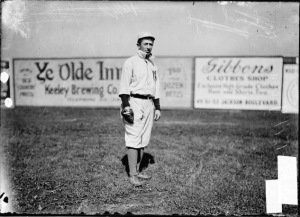
Before going on, I probably should touch on where that phrase, 'Hit 'em Where They Ain't", comes from. I remember it as a phrase used by the Manager of one of my favorite baseball teams, growing up. It turns out that its credited to a baseball player, from the turn of the last century, named "Wee Willie" Keeler. As is indicated by his nickname, "Wee Willie" was one of the smallest men to play baseball and yet, in 1894, he started a streak of eight seasons with 200 or more hits ... a feat that has been equaled by few. When asked about how he accomplished this, "Wee Willie" said, "I keep my eyes clear and I hit 'em where they ain't." In other words, he didn't focus on what he "couldn't do", due to limitations of his 5'4"/140# stature. His reliance was on what he "could do" with his skill at hitting a baseball where he wanted it to go. When I was a fledgling Sales Rep, I was blessed to have a Sales Manager who used this illustration, to encourage my best performance regardless of my circumstances.

The Luncheon Speaker I mentioned earlier was Kent Craford, CEO of SeaPort Airlines. Although that may seem like a stretch for the topic I'm addressing, it actually couldn't be a better fit. You see, SeaPort Airlines launched their business this past June. Do you remember what was happening with most airlines this past June? The same conditions that had me paying $4.57 per gallon to fill up my SUV had most airlines in a panic. They were cutting costs (and related services) and increasing prices in every way they could find. You'd have to be crazy to start a new airlines at a time like that, right?! Maybe. And maybe not, if the new airlines has a smart business plan to "Hit 'em Where They Ain't".

Even if I could completely detail the SeaPort Airlines business plan for you, it wouldn't be appropriate for me to do so here. But here are some of the key elements that I do recall:

They recognized a significant business need that wasn't being met. Specifically, there is substantial need for business travel between Seattle and Portland. Driving from one city to the next takes about three hours. Roughly the same amount of time is required, if you fly the airlines that have been servicing this route. SeaPort's average time is 90 minutes.

A key to SeaPort's ability to cut travel time in half is their use of an aircraft type that allows them to fly in and out of general aviation facilities where TSA Security is not required.

They're able to offer a level of service that's close to the experience of flying on a privately-owned jet at competitive prices.

Again, the type of aircraft being used by SeaPort is a crucial element to their ability to offer reasonable fares. While fuel accounts for 50% to 70% of most airlines' operating costs, with SeaPort, it's only about 25%.

That's a pretty good example of "Hit 'em Where They Ain't", don't you think? Another phrase that fits is "Yankee Ingenuity". As far as I'm concerned, that has been the most important element, setting the U.S. business culture apart from the rest of the world. When market conditions are challenging, it's important to remind yourself of this, regardless of your role in business. I think it's especially important, if you're in Sales. So, I want to encourage everyone in a Sales Management role to give attention to this regularly. Of course, you're welcome to pass my anecdotes along, if that seems helpful. Better yet, look for opportunities for your Sales Team members to have an experience similar to mine with this week's SeaPort presentation. It didn't matter that the Presenter was a CEO and not a Sales person, per se. And it didn't matter that I don't have an airlines industry background. The important thing was coming away with a refreshed "can do" attitude. That can make all the difference in Sales performance, especially with those who have been letting circumstances control them instead of the other way around.

What's been your experience in dealing with "Self-Limiting Beliefs"? Has the "Hit 'em Where They Ain't" approach worked well for you? What inspirational examples, like mine with SeaPort Airlines, have you come across lately? Please let us know, so it can be shared with others.

Tuesday, December 2, 2008

“New School” Cold Calling

Not long ago, I saw an article entitled “Why Cold Calling Is Dead”. Around the same time, I came across a another article entitled “10 Things I Love About Cold Calling”. As I was considering these opposing points of view, a local business contact sent me a note saying that he was working on his Sales Organization’s Funnel Management and that he would appreciate me addressing that topic on this blog. Considering that, if Cold Calling fits in with Funnel (Pipeline) Management, it fits in at the top or beginning, in the Prospecting and Qualifying phase, I thought I should examine its viability.


In assessing “Why Cold Calling Is Dead”, I found that the main point was, “Our world of selling is closed off from other areas of business that continue to adopt and embrace new, efficient ideas.” It reminded me of a company I did some work for a few years back that sells software and services to correctional organizations. Their “sweet spot” was County Jails. This business had emerged from a company that was founded as a vending business, coming out of WWII. Believe it or not, I found that the present day company was continuing to have their Sales force work as though they were working a vending route – i.e. the Sales person spent their days driving from County Seat to County Seat, Cold Calling each County’s Sheriff or Jail Manager. Obviously, this is a great example of an organization that needed to “embrace new, efficient ideas”.

Although my experience supports the main point of “Cold Calling Is Dead”, as I considered the reasoning of “10 Things I Love About Cold Calling!”, there seemed to be a disconnect – i.e. each of these “10 Things” seemed legitimate. There was also that troubling Funnel Management consideration … If Cold Calling doesn’t fit in with Prospecting and Qualifying anymore, what does? So, to resolve this dilemna, I thought it might be productive to contrast my view of Cold Calling in the formative days of my Sales career with my current approach.

If you’ve visited this blog before, you may recall an earlier posting entitled “The ‘Tech-Savvy’ Sales Organization”. There I mentioned “Smoke Stacking”, the Cold Calling technique included in my initial training, in my first Sales territory, in the Midwest. “Smoke Stacking” is another great example of the need to “embrace new, efficient ideas”. However, I don’t go “Smoke Stacking” anymore and yet I do find myself regularly doing what I consider to be “Cold Calling”. So, where’s the disconnect?

Perhaps the disconnect is that, while the author of “Cold Calling Is Dead” is correct with their main point, they’re making the mistake of “throwing out the baby with the bath water”. I think its just semantics though. For me, the lesson isn’t that Cold Calling should be “laid to rest”. Like many other “Old School” techniques, it just needs to be applied differently, to fit in with the realities of the “New School”. In this reality, its something I do almost daily. And I teach it to others, encouraging them to look at “Cold Calling” as an exciting “adventure”, rather than letting it be a source of anxiety. But, I don’t teach “Smoke Stacking”. Instead, I teach appropriate ways to use the phone, email, networking events and especially, social media as ways to connect with new Prospects.

I guess it turns out that I sort of agreed with both the articles I mentioned at the outset. In as much as it pertains to “Old School” application, I agree, “Cold Calling Is Dead”. But, given a “New School” approach, I also agree that there are at least “10 Things I Love About Cold Calling!”

How about you? What are your views on Cold Calling? Please pass them along and share them with us.